
EraHost – Free Domain, Cheap Hosting!


 USD - United States Dollar
 EUR - Euro
 GBP - British Pound
 CAD - Canadian Dollar
 CHF - Swiss Franc
 JPY - Japanese Yen
 AUD - Australian Dollar
 TRY - Turkish Lira
 CNY - Chinese Yuan
 INR - Indian Rupee
 UAH - Ukrainian Hryvnia
 AED - United Arab Emirat...United Arab Emirates Dirham
 AMD - Armenian Dram
 AOA - Angolan Kwanza
 ARS - Argentina Peso
 AWG - Aruba Guilder
 AZN - Azerbaijanian Mana...Azerbaijanian Manat
 BAM - Bosnian Convertibl...Bosnian Convertible Marka
 BDT - Bangladesh Taka
 BGN - Bulgarian Lev
 BHD - Bahraini Dinar
 BIF - Burundian Franc
 BMD - Bermudian Dollar
 BND - Brunei Dollar
 BOB - Bolivian Boliviano
 BRL - Brazilian Real
 BSD - Bahamian Dollar
 BTN - Bhutanese Ngultrum
 BWP - Botswana Pula
 BZD - Belize Dollar
 CLP - Chilean Peso
 CRC - Costa Rican Colon
 CVE - Cape Verdean Escud...Cape Verdean Escudo
 CZK - Czech Koruna
 DJF - Djiboutian Franc
 DKK - Danish Krone
 DOP - Dominican Peso
 DZD - Algerian Dinar
 EGP - Egyptian Pound
 ETB - Ethiopian Birr
 FJD - Fijian Dollar
 FKP - Falkland Island Po...Falkland Island Pound
 GEL - Georgian Lari
 GGP - Guernsey Pound
 GHS - Ghanaian Cedi
 GMD - Gambian Dalasi
 GTQ - Guatemalan Quetzal
 GYD - Guyanese Dollar
 HKD - Hong Kong Dollar
 HNL - Honduran Lempira
 HRK - Croatian Kuna
 HUF - Hungarian Forint
 ILS - Israeli New Shekel
 IMP - Isle of Man Pound
 ISK - Icelandic Krona
 JEP - Jersey Pound
 KES - Kenyan Shilling
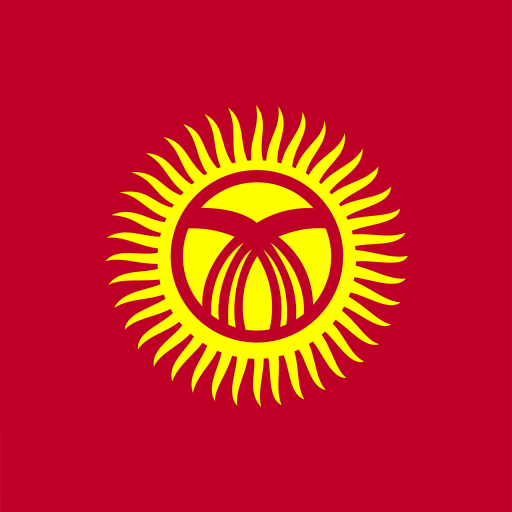 KGS - Kyrgystani Som
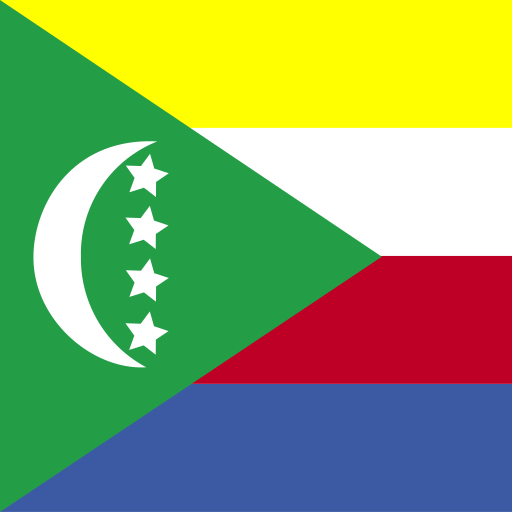 KMF - Comorian Franc
 KRW - South Korean Won
 KWD - Kuwaiti Dinar
 KZT - Kazakhstani Tenge
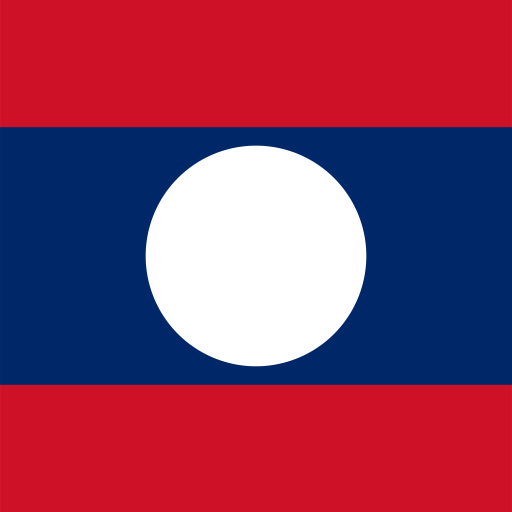 LAK - Lao Kip
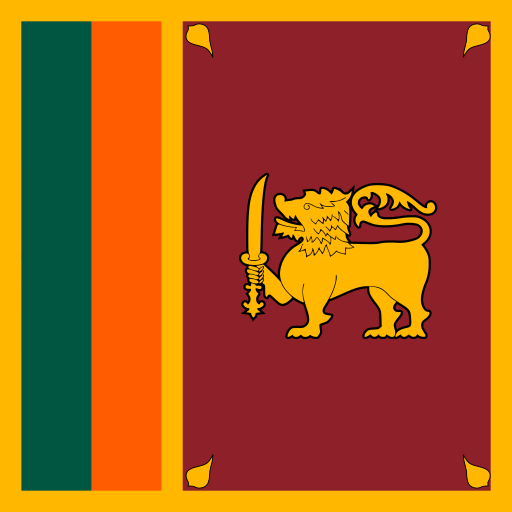 LKR - Sri Lankan Rupee
 LRD - Liberian Dollar
 LSL - Lesotho Loti
 LTL - Lithuanian Litas
 LVL - Latvian Lats
 MAD - Moroccan Dirham
 MDL - Moldovan Leu
 MKD - Macedonian Denar
 MNT - Mongolian Tugrik
 MOP - Macanese Pataca
 MRO - Mauritanian Ouguiy...Mauritanian Ouguiya
 MUR - Mauritian Rupee
 MVR - Maldivian Rufiyaa
 MXN - Mexican Peso
 MYR - Malaysian Ringgit
 MZN - Mozambican Metical
 NAD - Namibian Dollar
 NIO - Nicaraguan Cordoba...Nicaraguan Cordoba Oro
 NOK - Norwegian Krone
 NPR - Nepalese Rupee
 NZD - New Zealand Dollar
 OMR - Omani Rial
 PEN - Peruvian Nuevo Sol
 PGK - Papua New Guinean...Papua New Guinean Kina
 PKR - Pakistani Rupee
 PLN - Polish Zloty
 PYG - Paraguayan Guarani
 QAR - Qatari Riyal
 RON - Romanian New Leu
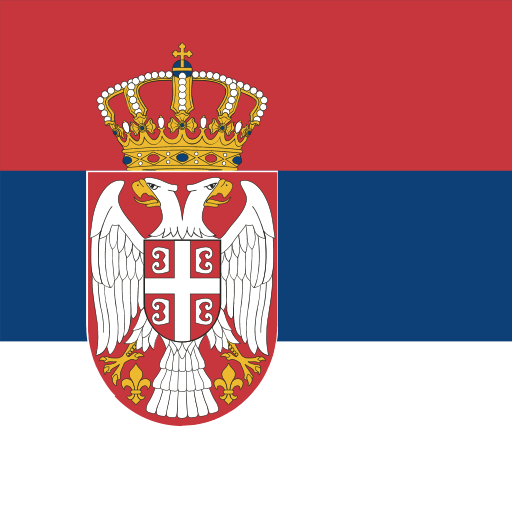 RSD - Serbian Dinar
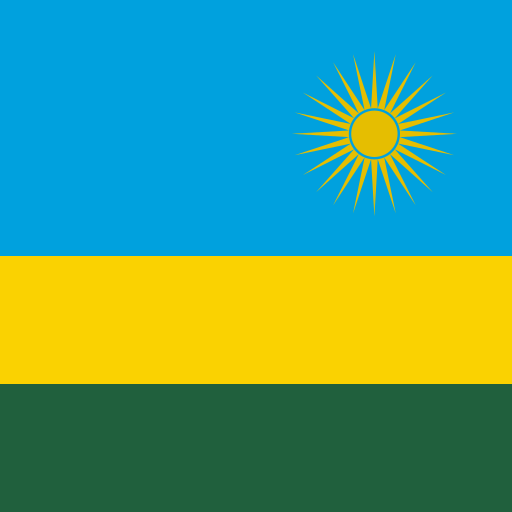 RWF - Rwandan Franc
 SAR - Saudi Riyal
 SBD - Solomon Islands Do...Solomon Islands Dollar
 SCR - Seychellois Rupee
 SEK - Swedish Krona
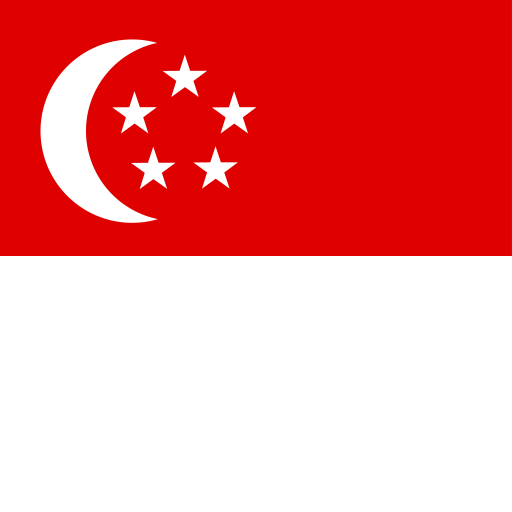 SGD - Singapore Dollar
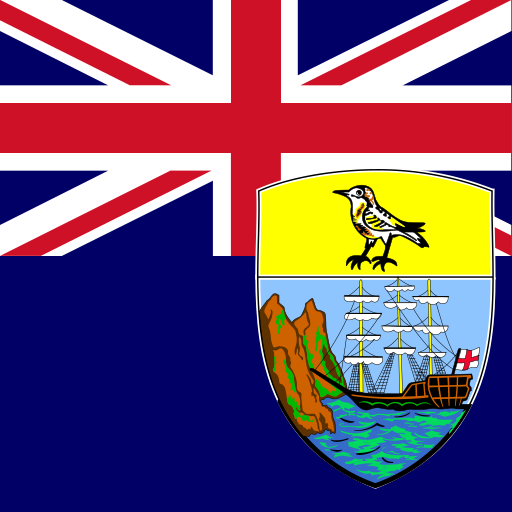 SHP - St. Helena Pound
 SRD - Surinamese Dollar
 SVC - Salvadoran Colon
 SZL - Swazi Lilangeni
 THB - Thai Baht
 TJS - Tajikistani Somoni
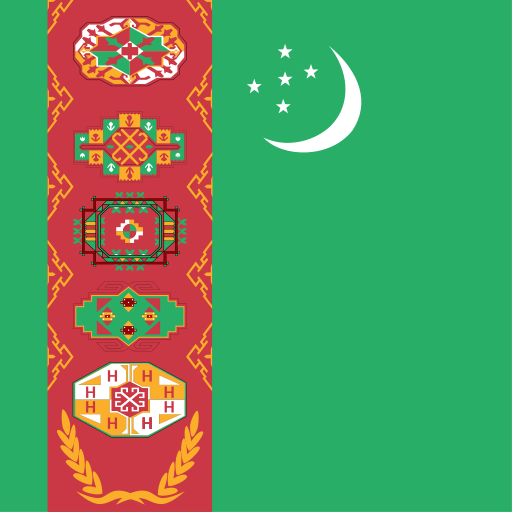 TMT - Turkmenistani Mana...Turkmenistani Manat
 TND - Tunisian Dinar
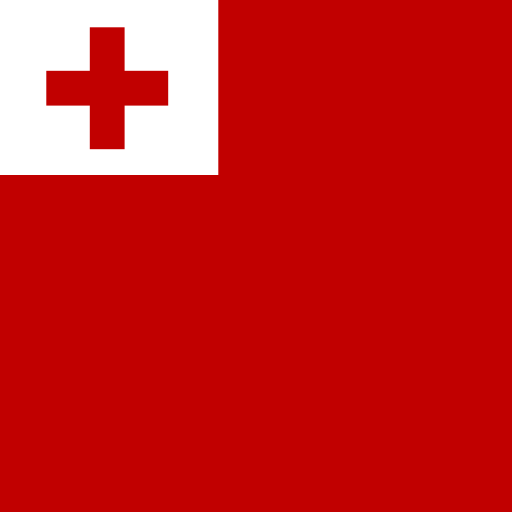 TOP - Tongan Pa`anga
 TWD - New Taiwan Dollar
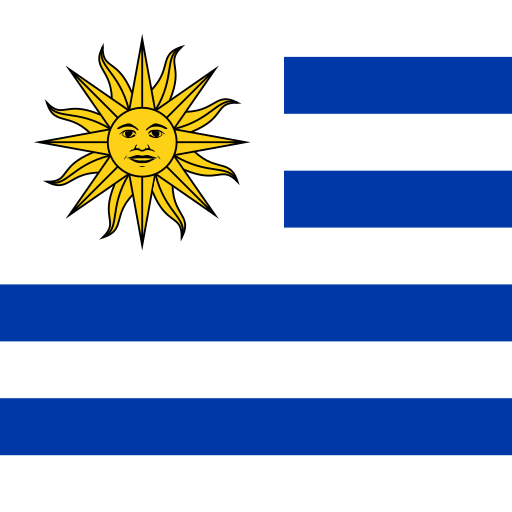 UYU - Uruguayan Peso
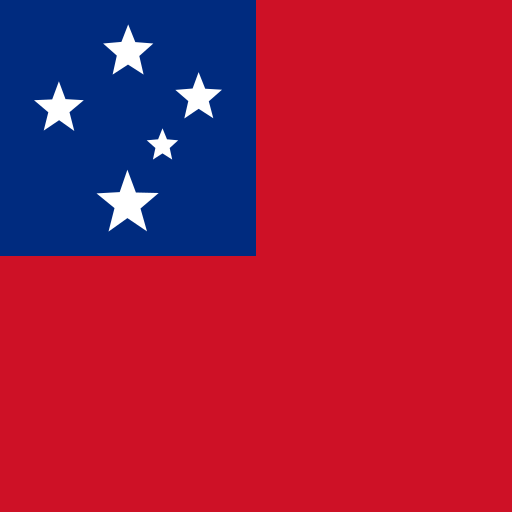 WST - Samoan Tala
 ZMW - Zambian Kwacha
 › Blog
› Website Security
› Blog
› Website Security

| Attribute | Details |
|---|---|
| Common Name | Drupalgeddon |
| CVE Identifier | CVE-2014-3704 |
| Drupal Advisory | SA-CORE-2014-005 |
| Vulnerability Type | SQL Injection (via database abstraction layer) |
| Affected Versions | Drupal 7.x (all versions before 7.32) |
| Severity (CVSS v3 Base) | 10.0 CRITICAL (CVSS:3.0/AV:N/AC:L/PR:N/UI:N/S:C/C:H/I:H/A:H) |
| Attack Vector | Remote, unauthenticated (requires no login) |
| Primary Impact | Full database control, data theft, PHP code execution, complete site/server compromise |
The vulnerability resides in Drupal 7's Database Abstraction API, specifically in how it handles expanded array arguments in SQL queries through the expandArguments() function in includes/database/database.inc.
When user-supplied input containing specially crafted nested arrays is passed to database queries, the sanitization logic fails to properly escape the content, allowing an attacker to inject arbitrary SQL syntax directly into the generated query. This bypasses Drupal's standard input filtering and prepared statement protections.
users table.Attack URL pattern often seen in logs:
Option 1: Full Update (RECOMMENDED)
Upgrade to Drupal 7.32 or later. However, note that Drupal 7 reached End-of-Life (EOL) in January 2025 and no longer receives security updates. The long-term solution is migration to Drupal 10+.
Option 2: Apply the Emergency Patch (If Update Is Impossible)
If patching will take time, restrict site access via .htaccess (Apache) or server configuration to only trusted IPs.
# In .htaccess in Drupal root
Order deny,allow
Deny from all
Allow from 203.0.113.10  # Your IP
Allow from 192.168.1.0/24 # Your local networkIf your site ran Drupal 7.x before version 7.32, assume it was compromised. Conduct thorough checks:
This vulnerability had unprecedented real-world impact:







 Telegram Bot
 USD - United States Dollar
 EUR - Euro
 GBP - British Pound
 CAD - Canadian Dollar
 CHF - Swiss Franc
 JPY - Japanese Yen
 AUD - Australian Dollar
 RUB - Russian Ruble
 TRY - Turkish Lira
 CNY - Chinese Yuan
 INR - Indian Rupee
 UAH - Ukrainian Hryvnia