


 USD - United States Dollar
 EUR - Euro
 GBP - British Pound
 CAD - Canadian Dollar
 CHF - Swiss Franc
 JPY - Japanese Yen
 AUD - Australian Dollar
 TRY - Turkish Lira
 CNY - Chinese Yuan
 INR - Indian Rupee
 UAH - Ukrainian Hryvnia
 AED - United Arab Emirat...
 AMD - Armenian Dram
 AOA - Angolan Kwanza
 ARS - Argentina Peso
 AWG - Aruba Guilder
 AZN - Azerbaijanian Mana...
 BAM - Bosnian Convertibl...
 BDT - Bangladesh Taka
 BGN - Bulgarian Lev
 BHD - Bahraini Dinar
 BIF - Burundian Franc
 BMD - Bermudian Dollar
 BND - Brunei Dollar
 BOB - Bolivian Boliviano
 BRL - Brazilian Real
 BSD - Bahamian Dollar
 BTN - Bhutanese Ngultrum
 BWP - Botswana Pula
 BZD - Belize Dollar
 CLP - Chilean Peso
 CRC - Costa Rican Colon
 CVE - Cape Verdean Escud...
 CZK - Czech Koruna
 DJF - Djiboutian Franc
 DKK - Danish Krone
 DOP - Dominican Peso
 DZD - Algerian Dinar
 EGP - Egyptian Pound
 ETB - Ethiopian Birr
 FJD - Fijian Dollar
 FKP - Falkland Island Po...
 GEL - Georgian Lari
 GGP - Guernsey Pound
 GHS - Ghanaian Cedi
 GMD - Gambian Dalasi
 GTQ - Guatemalan Quetzal
 GYD - Guyanese Dollar
 HKD - Hong Kong Dollar
 HNL - Honduran Lempira
 HRK - Croatian Kuna
 HUF - Hungarian Forint
 ILS - Israeli New Shekel
 IMP - Isle of Man Pound
 ISK - Icelandic Krona
 JEP - Jersey Pound
 KES - Kenyan Shilling
 KGS - Kyrgystani Som
 KMF - Comorian Franc
 KRW - South Korean Won
 KWD - Kuwaiti Dinar
 KZT - Kazakhstani Tenge
 LAK - Lao Kip
 LKR - Sri Lankan Rupee
 LRD - Liberian Dollar
 LSL - Lesotho Loti
 LTL - Lithuanian Litas
 LVL - Latvian Lats
 MAD - Moroccan Dirham
 MDL - Moldovan Leu
 MKD - Macedonian Denar
 MNT - Mongolian Tugrik
 MOP - Macanese Pataca
 MRO - Mauritanian Ouguiy...
 MUR - Mauritian Rupee
 MVR - Maldivian Rufiyaa
 MXN - Mexican Peso
 MYR - Malaysian Ringgit
 MZN - Mozambican Metical
 NAD - Namibian Dollar
 NIO - Nicaraguan Cordoba...
 NOK - Norwegian Krone
 NPR - Nepalese Rupee
 NZD - New Zealand Dollar
 OMR - Omani Rial
 PEN - Peruvian Nuevo Sol
 PGK - Papua New Guinean...
 PKR - Pakistani Rupee
 PLN - Polish Zloty
 PYG - Paraguayan Guarani
 QAR - Qatari Riyal
 RON - Romanian New Leu
 RSD - Serbian Dinar
 RWF - Rwandan Franc
 SAR - Saudi Riyal
 SBD - Solomon Islands Do...
 SCR - Seychellois Rupee
 SEK - Swedish Krona
 SGD - Singapore Dollar
 SHP - St. Helena Pound
 SRD - Surinamese Dollar
 SVC - Salvadoran Colon
 SZL - Swazi Lilangeni
 THB - Thai Baht
 TJS - Tajikistani Somoni
 TMT - Turkmenistani Mana...
 TND - Tunisian Dinar
 TOP - Tongan Pa`anga
 TWD - New Taiwan Dollar
 UYU - Uruguayan Peso
 WST - Samoan Tala
 ZMW - Zambian Kwacha


 Telegram Bot

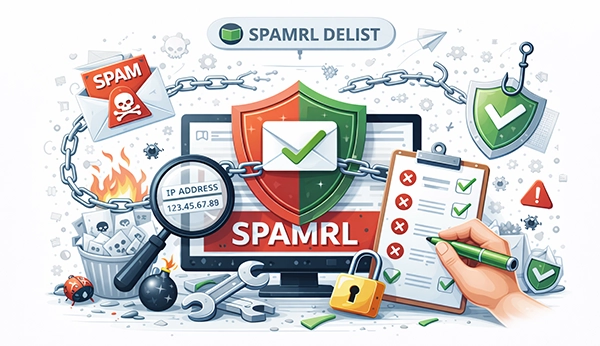
If your domain or IP has been flagged on SpamRL, it may be due to spam being sent from your email server, often caused by malware or compromised accounts. Identifying and resolving these issues is critical to delisting from SpamRL and avoiding future blacklisting.
Malware Scanning on Your Server
1
Install and Use ClamAV
- Install ClamAV:
sudo apt-get install clamav
- Update the virus database:
sudo freshclam
- Scan your server:
sudo clamscan -r /var/www/html
- Check the results and quarantine/delete infected files.
2
Scan for Suspicious Scripts
- Look for unexpected or unauthorized PHP scripts in web directories:
find /var/www/html -type f -name "*.php" | xargs grep -i "base64_decode"
- Delete or quarantine suspicious files.
3
Use Online Scanners for Websites
- Scan your website using tools like:
- Sucuri SiteCheck
- VirusTotal
Checking for Compromised Email Accounts
1
Analyze Email Logs
- Check the mail server logs for unusual activity (e.g., excessive emails sent):
- For Postfix:
sudo tail -f /var/log/mail.log
- For Exim:
sudo tail -f /var/log/exim_mainlog
- For Postfix:
- Look for:
- High volumes of outgoing emails.
- Unauthorized email addresses.
2
Identify the Top Email Senders
- Use command-line tools to find accounts sending the most emails:
- For Postfix:
grep "from=<" /var/log/mail.log | awk '{print $7}' | sort | uniq -c | sort -nr | head -10
- For Postfix:
3
Disable Compromised Accounts
- If you identify an account sending spam, temporarily disable it and reset the password.
Verify Your Email Server Configuration
1
Check for Open Relays
- Ensure your mail server is not an open relay (i.e., it does not allow unauthorized email sending).
- Test using tools like MXToolbox Open Relay Test.
2
Review Authentication Logs
- Check for brute-force attacks or unauthorized logins:
sudo grep "authentication failure" /var/log/secure
Securing Your Server and Accounts
Update Software
- Web Server: Update Apache, Nginx, or other web server software to the latest versions.
- CMS Platforms: Ensure WordPress, Joomla, or other CMS systems are updated. Remove unused plugins/themes.
Enforce Strong Passwords
- Require complex passwords for all email accounts.
- Enable Two-Factor Authentication (2FA) if available.
Limit Email Sending
- Set email rate limits per account to prevent excessive spam from compromised accounts.
Monitor Traffic
- Use monitoring tools like iftop or nload to detect unusual outgoing traffic.
Preventive Measures
Set Up Email Authentication
- SPF:
v=spf1 include:_spf.example.com ~all
- DKIM: Publish a TXT record containing your DKIM public key.
- DMARC: Define email authentication policy.
Scan Regularly
- Automate malware scans with a cron job for ClamAV:
crontab -e
Add the following line to scan daily:
0 3 * * * clamscan -r /var/www/html
Monitor Reputation
- Google Postmaster Tools.
- Microsoft SNDS (Smart Network Data Services).
- MXToolbox Blacklist Monitor.
Tools to Help with Scanning
| Tool | Purpose |
|---|---|
| ClamAV | Scan for malware on servers. |
| RKHunter | Check for rootkits or unusual system changes. |
| Sucuri | Online scanner for websites. |
| Fail2Ban | Block IPs after repeated login failures. |
| Malwarebytes | Scan Windows servers for malware. |
Delisting After Cleanup
1
Re-check Reputation
- Use MXToolbox or Spamhaus to ensure you are no longer flagged.
2
Submit a Delisting Request
- Visit the SpamRL provider website and provide details of the issue resolution.
3
Monitor for Recurrence
- Set up alerts to detect spammy activity early.
Example Scenario
- Issue: A compromised email account sent spam.
- Action Taken:
- Disabled the account and reset the password.
- Scanned the server with ClamAV and removed malware.
- Implemented SPF, DKIM, and DMARC.
- Delisting Request:
- Submitted evidence to Spamhaus and provided clean mail server logs.
By scanning for malware and compromised accounts, securing your server, and implementing authentication, you can clean up your server and ensure your IP or domain is delisted from SpamRL.





 USD - United States Dollar
 EUR - Euro
 GBP - British Pound
 CAD - Canadian Dollar
 CHF - Swiss Franc
 JPY - Japanese Yen
 AUD - Australian Dollar
 RUB - Russian Ruble
 TRY - Turkish Lira
 CNY - Chinese Yuan
 INR - Indian Rupee
 UAH - Ukrainian Hryvnia